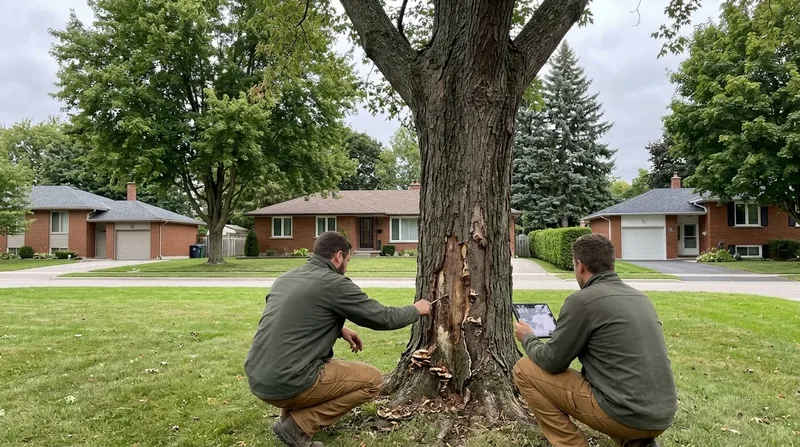




Tree Disease Diagnosis in London begins with a careful on-site examination of a declining tree. Our ISA Certified Arborists assess crown condition, bark integrity, root collar health and visible root plate to determine what can be preserved and what must be removed. In London and the surrounding municipalities, mature maples, oaks, birches and ash trees face pressure from weather, soil compaction, ice storms and pests like the emerald ash borer. A professional diagnosis prevents costly mistakes, protects your property and guides your next decision, whether that is pruning, cabling or removal. We have served the London area since 2012 with concrete, field-tested advice. Call (548) 708-7545 for a free estimate today.
Why Tree Disease Diagnosis Matters in London
A declining tree is not always a dead tree. Stress from construction, root damage, drought, salt exposure or pest pressure can weaken even a healthy specimen. Without professional assessment, homeowners often remove trees that could recover, or ignore early warning signs until the tree becomes a hazard. In London neighbourhoods with mature street trees and ravine lots, accurate diagnosis saves money and preserves the canopy.
- We identify the root cause: pest damage, disease, environmental stress or structural defect.
- We document symptoms in a written report suitable for your municipality or insurance claim.
- We recommend targeted treatment, pruning or removal based on tree health and site conditions.
- We explain the timeline for decline and your options for action.
- We provide clarity so you make decisions with confidence, not panic.
A single diagnosis often prevents the expense of unnecessary removal or the liability of a hazardous tree left standing.
Key info: In London, a mature silver maple showing crown thinning, bark cracks and root collar damage costs $95 to $175 to diagnose. The same tree might be saved with targeted pruning, or safely removed before it threatens a fence or structure. The diagnosis pays for itself the first time it changes your decision.
How We Diagnose Trees in the London Area
Our process is straightforward and thorough. We arrive on site with binoculars, a measuring tape and a clipboard. We examine the tree from multiple angles, climb if necessary to inspect upper branches, and probe the root collar and visible roots. We take photographs and notes. We then explain our findings face-to-face and provide a written summary with next steps. The entire visit typically takes 30 to 45 minutes for a single tree, or up to two hours for a group of trees on a larger property.
- We assess crown density, branch angles, bark condition and signs of pest or disease.
- We examine the root collar for girdling roots, root plate heave or decay.
- We check for hollow sections, cracks, cavities or branch failure risk.
- We identify specific pests (emerald ash borer, scale insects, borers) or fungal infections.
- We measure tree height and diameter to support permit applications if needed.
- We recommend pruning, tree cabling and bracing, treatment or removal.
You receive a clear opinion backed by years of field experience and ISA training. If the tree can be saved, we explain how. If removal is the safer choice, we explain why and can provide a separate tree removal quote on the spot.
Real example: A homeowner in Strathroy-Caradoc noticed a red oak with yellowing leaves and sparse branching. Our diagnosis revealed early emerald ash borer damage to an adjacent ash tree, not the oak. The oak was stressed by root compaction from a recent driveway repair. We recommended root zone aeration and targeted pruning. The oak recovered within two seasons. Without diagnosis, the homeowner might have removed both trees.
Diagnosis Methods and What They Reveal
| Method | What We Learn | When We Use It |
|---|---|---|
| Visual inspection | Crown shape, branch condition, bark damage, pest or disease signs visible from the ground. | Every diagnosis. First step for all trees. |
| Climbing and close inspection | Upper branch attachment, internal cavities, hidden pest galleries, canker size and spread. | Tall trees, unclear crown damage, suspected internal decay. |
| Root collar and root plate assessment | Girdling roots, soil heave, root decay, stability and anchoring strength. | Trees on ravine lots or with visible root problems. |
| Sonic or resistance drilling (if needed) | Internal decay, hollow sections and remaining solid wood thickness. | Suspect internal damage, cavity trees, safety assessment for retention. |
Each method builds on the others. A visual inspection alone may miss internal decay. Climbing reveals upper branch failure risk. Root examination confirms stability. Together, they paint a complete picture of tree health and your options.
Permits and Documentation for Tree Diagnosis in London
The City of London may require a permit for a private tree removal, and an arborist report supports that application. Our diagnosis report includes measurements, photographs and a professional recommendation that strengthens your permit submission. Rules and thresholds differ from one municipality across the London area, so we advise you to contact your local municipal office. We provide the documentation; you handle the permitting process. If you need ongoing support, such as arborist reports and risk assessment for insurance or liability purposes, we offer that as a separate service.
When to Schedule Tree Diagnosis
You can request a diagnosis at any time of year. Winter dormancy (late fall to late winter) is ideal because bare branches reveal crown structure and dead wood clearly. However, if a tree is showing acute stress, pest damage or hazard signs, do not wait. Call us immediately. A tree near hydro lines, a leaning tree, or one with fresh crown dieback needs urgent assessment. We respond to emergency calls 24 hours a day, 7 days a week across the London area.
For routine diagnosis of a slowly declining tree, schedule between November and March when we have capacity and the tree's condition is most visible. Spring and summer are busy with tree trimming, hedge trimming and emerald ash borer assessment work, so plan ahead if possible.
Next Steps: From Diagnosis to Action
After we deliver our diagnosis, you have clear options. If the tree can be saved, we can schedule tree pruning and crown reduction, root zone work or pest treatment. If removal is recommended, we provide a separate quote for that work. If the diagnosis is uncertain or the tree requires specialist input, we refer you to a consulting arborist or recommend a second opinion. We do not pressure you into a decision; we give you the facts and let you choose.
Contact Forest City Tree Trimming today for a free estimate. Call (548) 708-7545 or visit our contact page to schedule your diagnosis. We serve London and all surrounding municipalities in the region.
Prices Tree Disease Diagnosis in London — Indicative pricing
| Service | Price | Details |
|---|---|---|
| Single tree diagnosis | From $95 | On-site assessment, written report with photographs and recommendations. |
| Multiple trees (2 to 5 trees) | From $175 | Group assessment with individual recommendations for each tree. |
| Large property or complex cases | From $275 | Extended evaluation, climbing inspection, root assessment and detailed written report. |
| Sonic or resistance drilling (if needed) | From $150 | Internal decay detection for cavity trees or structural assessment. |
| Travel | Included | In London and the surrounding area. |
| Free estimate | Included | Call (548) 708-7545 for an appointment and pricing discussion. |
Indicative prices; free, personalized estimate within 24h at (548) 708-7545.